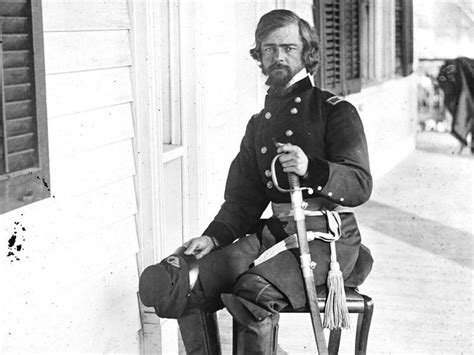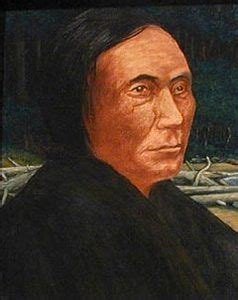
Washington Indigenous wars
The Transformation of the Northwest (1800–1900)
The history of the Pacific Northwest between 1800 and 1900 is a narrative of total transformation—the rapid shift from a vast, Indigenous-governed landscape to a settled American territory. What began as a delicate economic partnership during the fur trade era was soon overwhelmed by the weight of the Oregon Trail, the fervor of the Second Great Awakening, and the aggressive treaty-making of the 1850s. This century saw a collision of fundamentally different worldviews regarding land, spirit, and community—a friction that ignited decades of conflict from the Walla Walla Valley, the village of Seattle, to the Spokane Plains.
This era was defined by a radical economic and technical shift that fundamentally altered how humans interacted with the land:
The Seasonal Subsistence Economy: For millennia (10-12,00 years), the Plateau tribes followed a sophisticated “seasonal round.” This hunter-gatherer economy relied on the natural cycles of the earth—following the salmon runs, the blooming of the Camas prairies, and the migration of game. It was a system built on mobility, stewardship, and ecological reciprocity.
The Transition (1750–1850s): The arrival of the horse, european diseases and the fur trade introduced global commerce to the interior. While tribes gained access to the, christian missionaries, metal, and textiles, the “soft gold” of the fur trade began to shift the focus from subsistence to surplus, setting the stage for deeper outside encroachment.
The Industrial Revolution (1850s–1900): The discovery of gold and the arrival of the railroad brought an industrial economy centered on extraction and permanent transformation. Fences replaced open trails; irrigation ditches redirected rivers; and the plow broke the ancient prairies. This was a “market economy” that viewed the land not as a living relative, but as a collection of commodities—timber, wheat, and minerals.
This website explores the pivotal events, the influential figures on all sides, and the enduring legacy of the wars and treaties that fundamentally reshaped the Inland Northwest
The Cayuse War (1847–1850)
The immediate aftermath of the Whitman Massacre.
November 29, 1847: The Whitman Massacre.
- After substantial deaths from a measles a epidemic in their village, Cayuse warriors attack the mission at Waiilatpu. This event serves as the primary justification for the subsequent military campaigns in the region.
This event shifted the focus of the government from missionaries to the military
January 8, 1848: Battle of Sand Hollow.
The first major engagement of the Cayuse War. Oregon Volunteers clash with Cayuse and Palouse forces in the Oregon high desert. The volunteers successfully reach the mission site, but the war continues as a series of skirmishes.
The Yakama War & Puget Sound War (1855–1856)
Triggered by the unratified “Stevens Treaties” and the Colville gold rush.
October 6–8, 1855: Battle of Toppenish Creek (Haller’s Defeat).
Major Granville Haller is intercepted by Kamiakin’s forces. The tactical defeat of the U.S. Army signals that the Plateau tribes are a sophisticated military power.
December 7–10, 1855: Battle of Walla Walla.
A four-day battle between the Oregon Mounted Volunteers and a multi-tribal confederation. The death of Chief Peopeomoxmox during this battle remains one of the most controversial events of the era.
January 26, 1856: Battle of Seattle.
Native forces attack the fledgling settlement. The defense is bolstered by the USS Decatur, marking a rare instance of naval artillery used in the Pacific Northwest Indian Wars.
March 26, 1856: Cascade Massacre.
An attack on the vital portage at the Cascades of the Columbia. A young Lieutenant Philip Sheridan leads a counter-attack that stabilizes the supply line to the interior.
The Coeur d’Alene War / Spokane War (1858)
The campaign that fundamentally broke tribal resistance in the Inland Northwest.
May 17, 1858: The Steptoe Disaster (Battle of Pine Creek).
Near Rosalia, WA, a force of over 1,000 Coeur d’Alene, Spokane, and Palouse warriors surrounds Colonel Steptoe. The troops barely escape a total massacre by retreating at night.
September 1, 1858: Battle of Four Lakes.
Colonel George Wright returns with superior weaponry (Minie ball rifles). For the first time, the Army is able to strike tribal forces from a distance before they can get into range with their own weapons.
September 5, 1858: Battle of Spokane Plains.
A final, exhausting running battle across the prairies west of Spokane. This engagement disperses the tribal confederation.
September 8–10, 1858: The Horse Slaughter (Liberty Lake).
To ensure the tribes could not regroup, Wright orders the execution of 800 Palouse horses. This “economic warfare” destroys the tribes’ mobility and wealth, effectively ending the war in the Washington interior.
The Final Northwest Resistance (1876–1878)
The closing chapter of armed conflict.
June 17, 1877: Battle of White Bird Canyon.
The opening of the Nez Perce War. Chief Joseph and his followers inflict a massive defeat on the U.S. Cavalry in the Idaho canyons.
October 5, 1877: Battle of Bear Paw Mountain.
After a 1,100-mile fighting retreat, the Nez Perce are intercepted just 40 miles from the Canadian border. Chief Joseph delivers his famous surrender speech.
July 8, 1878: Battle of Birch Creek.
The decisive engagement of the Bannock War. General James Forsyth defeats a combined force of Bannock and Shoshone warriors in eastern Oregon.